Frost Heave and Your Gravel Driveway: What Northern Wisconsin Homeowners Should Fix Before Freeze-Up

Frost heave is the reason a gravel driveway that looked fine in October can turn into a rutted, pothole-riddled mess by April, and fall is the last chance to get ahead of it. Every spring, our crews at Quality Tree Service field calls from homeowners across Bayfield, Ashland, and Oneida counties who are watching their driveways buckle, sink, and swallow tires as the frost comes out of the ground. Nearly all of that damage traces back to two things: water in the driveway base and a surface that could not shed it when the cold arrived.

Driveways October 22, 2026 12 min read
About this guide

This guide explains how frost heave works, why gravel driveways in the Northwoods take such a beating, what this fall’s dry conditions mean for your driveway, and the practical steps worth taking, from culvert checks to professional driveway grading, before the ground locks up for the season.

The science

What Frost Heave Actually Is

Most people picture frost heave as water freezing and expanding, and that is part of it. Water does expand by about nine percent when it turns to ice. But the real damage comes from something called ice lensing.

1

Ice lenses lift the ground

As the freezing line moves down into the soil during winter, it pulls moisture up from the unfrozen ground below. That water collects at the freezing front and forms horizontal layers of ice, called lenses, that keep growing as long as there is water to feed them. Those lenses can push the ground above them upward by inches. On a driveway, that lift is rarely even. One section rises more than the next, and the surface cracks, humps, and loosens.

2

Spring thaw traps the water

The second half of the problem happens in spring. Frost leaves the ground from the top down. The upper layer thaws while the soil below is still frozen solid, so the meltwater has nowhere to drain. The top of your driveway turns into saturated, soupy material sitting on a frozen shelf. That is when a delivery truck, a loaded pickup, or even your own car can punch through and leave ruts that dry into ridges by June.

Three ingredients have to be present for serious frost heave: freezing temperatures that reach into the soil, a soil type that can wick water upward, and a supply of water.

Freezing temperaturesNorthern Wisconsin always delivers the first one.
Wicking soilThe second depends on what your driveway is built on.
A supply of waterThe third is the one you have the most control over.
Fall 2026

Why This Fall Is Different After the 2026 Drought

In early October, parts of Ashland, Bayfield, Douglas, Iron, and Sawyer counties were listed in exceptional drought. The Wisconsin DNR noted that much of the north had gone eight to ten weeks without a significant rainfall, and forecasters leaned toward a drier than normal October on top of that. Lakes and flowages are visibly low, and many driveways are as hard and dusty as they have been in years.

So does a dry fall mean a quiet spring for your driveway? Not necessarily, for three reasons.

01

Dry ground freezes deeper

Wet soil holds a lot of heat, and the water in it has to give up energy before it can freeze, which slows the frost down. Dry soil has much less of that buffer, so cold travels through it faster. If the region also gets a thin early snowpack, which acts as insulation when it is deep, frost can drive well below its usual depth. During the dry, low-snow winter of 2024 to 2025, the Wisconsin State Climatology Office reported frost pushing much deeper into the ground than the year before.

02

The water will come back

It always does. A wet stretch in November, a rain-on-snow event in December, or a fast March melt can resaturate a driveway base in days. If the crown is flat, the ditches are choked, or the culvert is half buried, that water parks itself right under the gravel just in time to freeze.

03

Drought hides drainage problems

On a normal fall, a homeowner sees puddles that sit for days and knows where the low spots are. This year, many of those warning signs never showed up. The low spots are still there. They are just dry for now.

The upside is real, too. Firm, dry ground is excellent for moving equipment and reshaping a driveway without tearing up the yard, and fall work done now settles in before winter instead of being churned by spring mud.

What’s underneath

Why Northwoods Driveways Take the Hardest Hit

What sits under your gravel matters as much as the gravel itself, and our service area covers some very different ground.

Lake Superior shoreline

Red clay

Along the Lake Superior shoreline around Ashland, Washburn, and the lower Bayfield Peninsula, much of the land sits on the red clay left behind by the glacial lake that once covered the basin. That clay holds water like a sponge and drains slowly. It does not wick moisture upward as quickly as silty soil, but once it is wet, it stays wet, and it turns slick and weak during thaw. A driveway laid directly on red clay without a proper base is almost guaranteed to rut every spring.

Iron River, Barnes & Hayward

Sandy glacial soils

Inland, around Iron River, Barnes, and parts of the Hayward area, the story shifts toward sandy and gravelly glacial soils. Clean sand drains well and resists frost heave, which is why driveways out there often hold up better. The catch is that many of those driveways were built with whatever material was handy, and pockets of silt, loam, or organic soil can hide under the surface. Those pockets heave while the sand around them stays put, which is exactly what creates the bumps and dips that rattle your teeth on the way to the road.

The worst offender

Silty soils

Silty soils are the worst offenders of all. Silt particles are small enough to pull water upward a long way but large enough to let it move freely, which is the perfect recipe for ice lenses.

Then there is the driveway itself. A lot of rural driveways in northern Wisconsin started as two tire tracks, got a load of gravel dumped on them every few years, and were never graded with a real crown or base. Over time, the gravel gets pushed into the soil below, the fine material washes out, and the driveway ends up lower than the ground beside it.

At that point, it is not a driveway anymore. It is a ditch that you drive in.
Walk it this week

Signs Your Driveway Is Set Up for Trouble This Winter

Take a slow walk down your driveway this week, ideally after any rain, and look at it the way water would.

Start with the shape

A well-built gravel driveway is higher in the middle than at the edges so rain and snowmelt run off to the sides. If yours is flat, or worse, dished in the center, water collects in the wheel tracks and soaks straight into the base. Washboarding, those rippled ridges that run across the driveway, is another clue. It usually means the surface has lost its fine binding material and the gravel is loose.

Look at the edges next

Grass and weeds creeping in from the sides trap water and build up a berm that keeps runoff from escaping. Over a few years, that berm can turn the driveway into a trough. If you can see a lip of sod higher than the gravel, water is being held on the driveway instead of shed off it.

Check where the water is supposed to go

Roadside ditches filled with leaves, sticks, and sediment cannot carry runoff away. A culvert that is crushed, rusted through, or half full of silt is one of the most common causes of spring washouts we see. If you are not sure where your culvert is, that alone is a sign it needs attention.

Remember what happened last spring

The soft spots, the places where the car sank, and the sections that heaved into humps will almost always do it again. Frost damage is predictable. The same spots fail year after year until the underlying cause is fixed.

Before freeze-up

Fall Driveway Prep: What to Do Before the Ground Freezes

The goal of fall driveway work is simple: get water off the driveway and away from it before winter, and give the surface enough structure to survive the thaw. Here is how that breaks down in practice.

Smooth, rounded river rock that rolls under tires, a poor surface choice for gravel driveways in northern Wisconsin
Rounded stone like this never locks together. Crushed, angular gravel does.
  1. Restore the crown

    Driveway grading is the single most effective fix for most gravel driveways. A crown of roughly half an inch of drop per foot from the centerline to each edge is a common target, enough to move water off quickly without making the driveway feel tilted. Grading pulls the gravel that has migrated to the edges and into the berms back to the center, reshapes the surface, and fills the wheel ruts. Done right, it also cuts the sod lip at the edges so water can actually leave.

  2. Open up the ditches

    Clean leaves, branches, and silt out of the roadside ditches along the driveway. Water should be able to flow from the driveway edge into the ditch and keep going. On longer rural driveways, small turnouts that direct runoff off into the woods every so often keep water from building up speed and volume.

  3. Clear and check the culvert

    Make sure both ends are open and the pipe is not crushed. A culvert sized too small, set too high, or packed with debris will back water up onto the driveway during the first big melt. Replacing a failed culvert in fall, while the ground is workable, is far easier than doing it during a March washout.

  4. Fill potholes the right way

    Throwing a shovel of gravel into a pothole only works until the next rain. Potholes need to be cut out to firm material, filled with crushed gravel that contains fines, and compacted. This year, the drought adds a wrinkle: bone-dry gravel does not compact well, so crews often need to add moisture to get a tight surface.

  5. Use the right gravel

    Rounded pea gravel or river rock looks nice but rolls under tires and never locks together. Crushed, angular aggregate with a mix of particle sizes and fines packs into a hard, water-shedding surface. If your driveway has been topped with the wrong material, driveway resurfacing with proper crushed gravel can make a dramatic difference.

  6. Mark the edges

    Before the first snow, set reflective driveway stakes along both sides, especially near the ditches and culvert. Plow drivers, including you, need to see where the gravel ends.

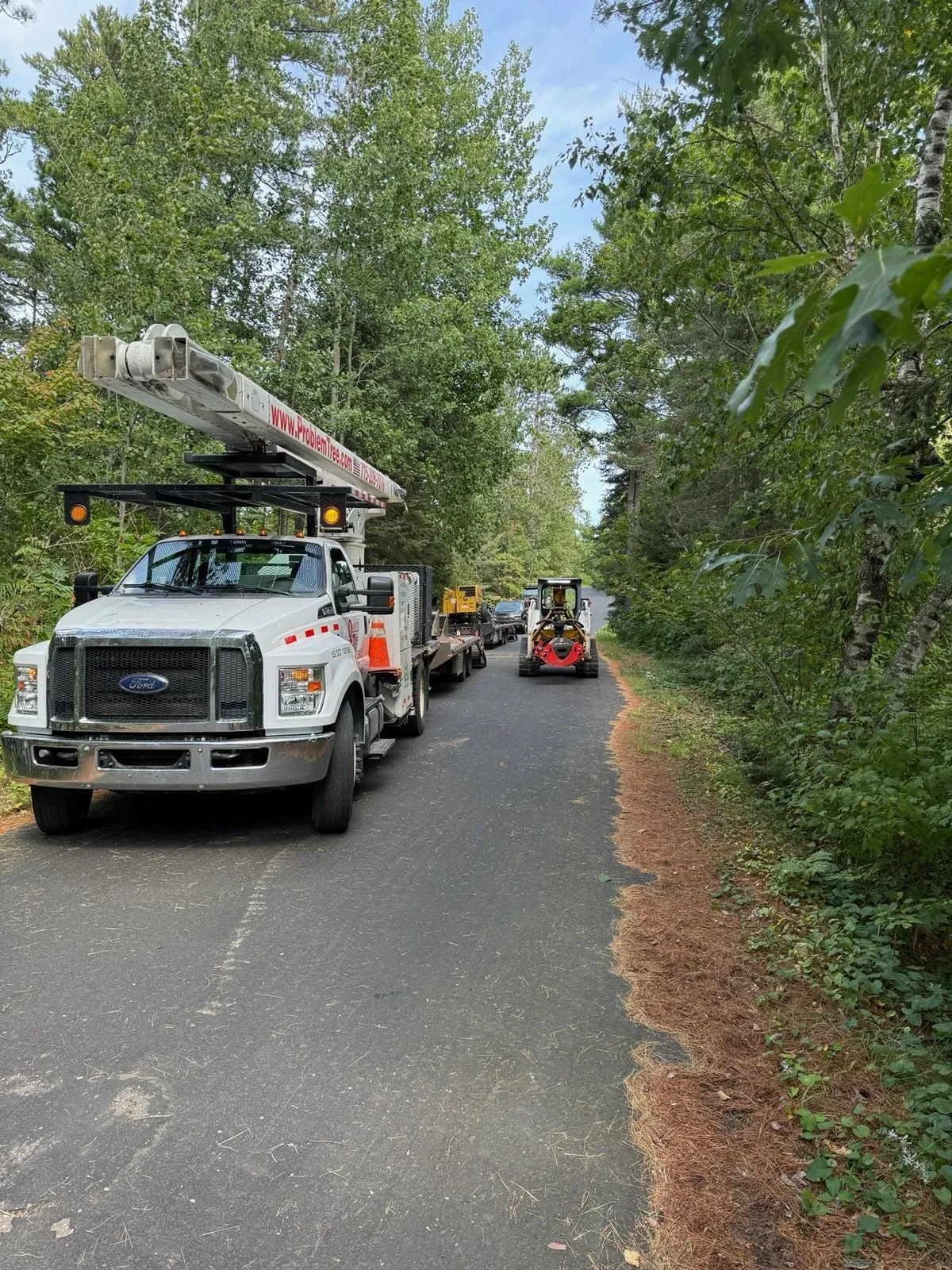
Bucket truck and equipment lined up on a narrow road through dense woods for driveway corridor tree work in northern Wisconsin
The driveway corridor

How the Trees Along Your Driveway Play a Role

In the Northwoods, most driveways run through or beside trees, and those trees affect how a driveway freezes, thaws, and drains more than most people realize.

  • Shade

    Shade is the big one. A section of driveway under a dense canopy of spruce, balsam, or hemlock gets little winter sun. Snow and ice linger there long after the open stretches have cleared, and in spring that shaded section thaws last and stays soft longest. If one stretch of your driveway is always the muddy one in April, look up. Selective tree trimming to raise the canopy and let in low winter sun can shorten that soft period noticeably.

  • Roots and stumps

    Roots matter too. Large roots running under a driveway can lift the surface on their own, and they create uneven support that frost then exaggerates. Stumps left from old clearing work slowly rot, leaving voids that collect water and sink. Stump grinding below grade, followed by proper fill and compaction, removes those weak spots before they become potholes.

  • Drought-weakened trees

    This fall, the drought brings a specific concern. Trees weakened by this summer’s dry spell are more likely to drop limbs under heavy, wet snow. A big limb across the driveway in January is an inconvenience. A dead tree that falls across the only way in or out during a storm is a real problem, especially for rural homes where emergency access matters. Walking your driveway corridor now and having any dead or leaning trees evaluated for hazard tree removal is time well spent.

  • Snow storage

    Finally, think about snow storage. Plowed snow has to go somewhere. If brush and saplings crowd right up to the gravel, snow gets piled on the driveway edges, which then melt back onto the surface in spring. Clearing a few feet of brush along each side gives snow room to go and gives meltwater a path off the driveway.

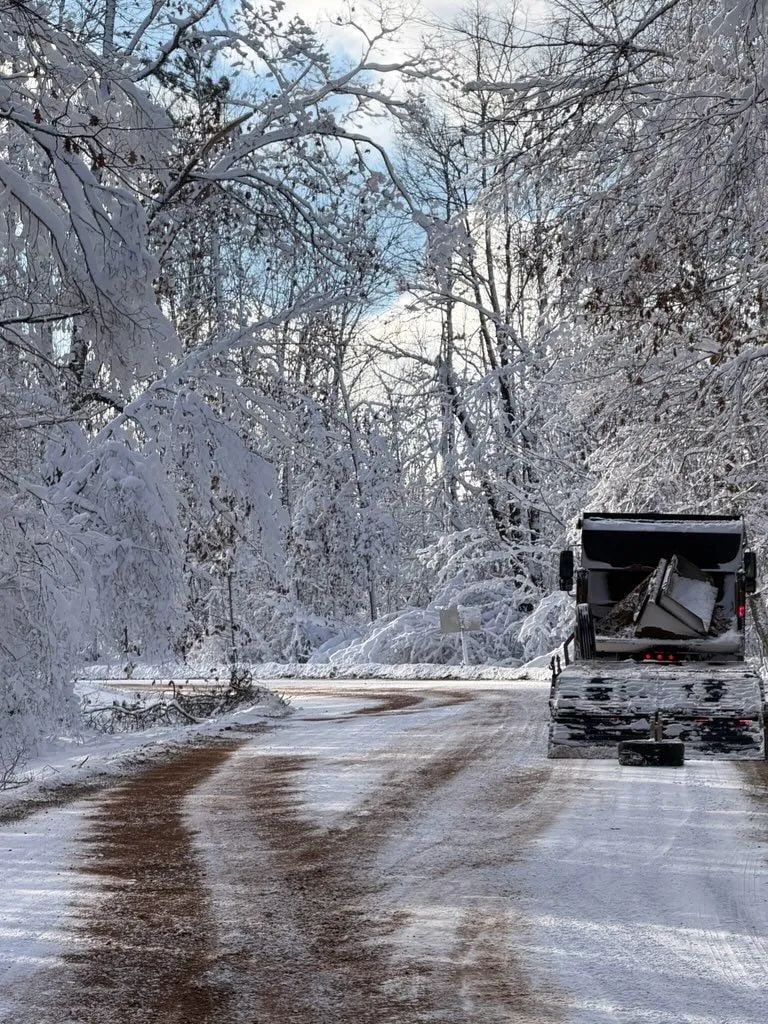
Plow truck on a snowy, tree-lined road in northern Wisconsin, where a low blade can scrape gravel off a driveway
December to March

Winter Habits That Protect a Gravel Driveway

Fall prep sets the stage, but how the driveway is treated over the winter decides a lot about what you find in spring.

Plow high

The most common way gravel driveways get destroyed in winter is a plow blade set too low. It scrapes up gravel, rolls it into the ditch or the lawn, and leaves bare soil behind. Raising the blade an inch or so with skid shoes, or leaving a thin layer of packed snow on the surface, protects the gravel underneath. If you hire a plow service, ask them directly how they handle gravel.

Push snow well past the edges

Snowbanks piled right at the driveway shoulder melt back onto the surface. Pushing snow a few feet beyond the gravel, and away from the culvert inlet, keeps that meltwater out of the base.

Go easy on the first thaw days

A sunny afternoon in February can soften the top inch of a driveway even when the ground below is frozen hard. Driving on it when it is soft starts ruts early. If you can, schedule heavy deliveries like propane, firewood, or building materials for cold mornings when the surface is still frozen.

Watch the culvert during melts

A quick check of the culvert during the first big warmup can catch an ice plug before it sends water across the driveway. Clearing the inlet with a shovel takes minutes and can prevent a washout.

Spring breakup

What to Expect When the Frost Comes Out in Spring

If you want proof of how seriously frost damages gravel, look at how the state and counties treat their own roads. Every spring, the Wisconsin Department of Transportation places weight restrictions on roughly 1,400 miles of state highways that are vulnerable while frost leaves the ground. Bayfield County posts its lettered county roads for reduced axle weights during spring breakup as well. This past spring, the state did not lift those restrictions in far northern Wisconsin until April 30.

~1,400miles of state highway under spring weight limits
April 30when far-north restrictions lifted this past spring
5 minfor one heavy truck to undo a winter of care

Your driveway goes through the same weak period, usually from mid March into late April or early May depending on the year. During those weeks, the safest approach is to keep heavy vehicles off it whenever possible. One loaded concrete truck, well drilling rig, or dump truck on a thawing driveway can do more damage in five minutes than a whole winter of regular traffic.

If ruts do form, resist the urge to fill them with fresh gravel while the driveway is still soft. That gravel just gets pushed into the mud. Wait until the driveway has firmed up, then grade and fill. Late spring driveway grading, once the frost is fully out, is often the best time to fix whatever the winter revealed.

This is also when you learn how well your fall work paid off. A driveway with a good crown, clean ditches, and an open culvert will still soften a bit during thaw, but it should dry out quickly and hold its shape.

Below the surface

When a Driveway Needs More Than a Touch-Up

Grading and fresh gravel solve most problems, but some driveways have deeper issues that no amount of surface work will fix. If the same sections fail every spring no matter how often they are graded, the problem is almost always below the surface.

A properly built gravel driveway has layers. At the bottom, the native soil is shaped and compacted. On problem soils like red clay or silt, a geotextile fabric is often laid on top of it to keep the soil and the gravel from mixing. Above that sits a thick base course of larger crushed stone that carries the load and lets water drain. The top layer is a few inches of finer crushed gravel that packs into a smooth driving surface. Each layer has a job, and when the base is missing or contaminated with soil, frost heave wins every time.

Signs that a driveway needs to be rebuilt rather than repaired include:

  • sections that are lower than the surrounding ground,
  • mud pumping up through the gravel during thaw,
  • deep ruts that return within weeks of grading,
  • and soft spots that never firm up even in summer.

Rebuilding typically means excavating the failed sections, correcting the drainage, installing fabric where needed, and placing new base and surface layers with proper compaction and crown. On longer rural driveways and private roads, it can also mean widening, clearing back the tree line for sun and snow storage, and adding or upsizing culverts. It is a bigger project, but it is a one-time fix instead of an annual expense.

Late fall is a good time to have that conversation even if the work waits until next season. Getting a driveway assessed now, while last spring’s damage is still visible and the ground is firm, lets you plan the right fix and get on the schedule before the spring rush.

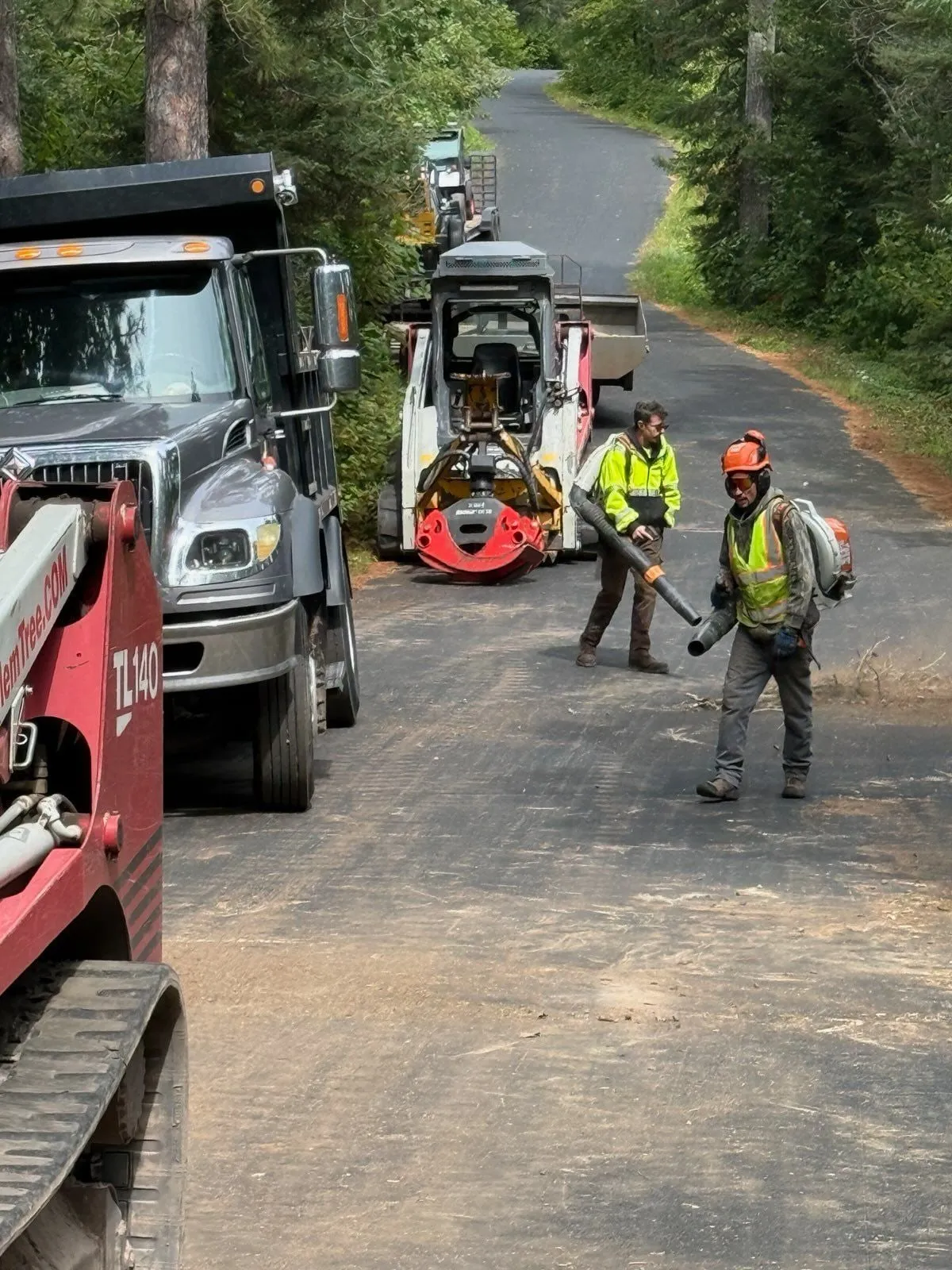
Quality Tree Service crew blowing debris off a wooded private road beside a dump truck and track loader in northern Wisconsin
Trees and ground, one crew

Driveway Grading and Gravel Work From a Northwoods Crew

1988Serving the Northwoods
85 yrsCombined crew experience
A+BBB rating since 2013

Quality Tree Service has been working the ground across Bayfield, Ashland, and Oneida counties since 1988. Most people know us for tree removal and tree trimming, but driveway grading, driveway resurfacing, aggregate gravel services, and road building have been part of what we do for nearly four decades. Owner Mark Hazelquist and our crew bring a combined 85 years of experience, along with the specialized equipment to grade, haul, and compact gravel on everything from a short residential driveway to a long private road through the woods. We have held a BBB A+ rating since 2013.

Because we handle both the trees and the ground, we can take care of the whole driveway corridor in one visit: trimming back the canopy, removing hazard trees, grinding stumps, clearing brush for snow storage, and then grading and resurfacing the driveway itself.

If your driveway turned into a mud pit last spring, or you just want it ready before winter, we would be glad to take a look. From Bayfield and Washburn down to Drummond and Barnes, our northern Wisconsin service area is covered, and our team can assess your driveway and recommend the right fix before the ground freezes. Call Quality Tree Service at (715) 603-6635 and we will come out to you. Call us today for more details.


Frequently Asked Questions About Frost Heave and Gravel Driveways

Is it too late in the fall to grade my gravel driveway?

Not as long as the ground is not frozen. Grading needs workable soil and gravel that can be compacted. In northern Wisconsin, that window usually stays open into November, and this year’s dry conditions have kept ground firm and accessible for equipment.

Does the drought mean less frost heave this winter?

Not necessarily. Dry soil lets frost penetrate deeper, and any rain or snowmelt before freeze-up can resaturate a driveway base quickly. Good drainage matters just as much in a dry year as a wet one.

What type of gravel is best for a driveway in northern Wisconsin?

Crushed, angular aggregate with a mix of sizes and fines works best because it locks together and sheds water. A coarser base layer underneath adds strength. Rounded pea gravel and river rock shift under tires and are a poor choice for driving surfaces.

How do I stop my gravel driveway from getting ruts every spring?

Keep water out of the base. That means a crowned surface, open ditches, a working culvert, and limiting heavy traffic during spring thaw. If ruts return no matter what, the base likely needs to be rebuilt.

Serving Bayfield County, Ashland County, and the surrounding Northwoods.

Ready to Get Started?

Request a free estimate or call Mark’s crew today — we respond fast across northern Wisconsin.