Is Your Tree Drought Stressed? What Northern Wisconsin Homeowners Should Check Before Snow Flies
If your maples went orange in August or your birch dropped its leaves before Labor Day, drought stress is the likely reason, and it is the question our tree service crews at Quality Tree Service are hearing most across northern Wisconsin this fall. After a soggy spring, the rain across Bayfield, Ashland, and Oneida counties more or less stopped in July and never really came back. By late summer, Bayfield County had logged its fourth-driest August on record, running about 2.4 inches below normal, while Ashland County posted its seventh-driest August at roughly 2.3 inches short. Much of the region has since slipped into exceptional drought, only the second time northern Wisconsin has reached that level on record.
A mature tree carries the effects of a drought for years, and the damage often shows up at the worst possible time: when the first heavy, wet snow of the season settles on a limb that has quietly gone brittle.
This guide walks through what the drought has done to local trees, how to tell ordinary fall color from real decline, what you can still do before the ground freezes, and when it makes sense to call a professional for tree trimming or tree removal.
How the 2026 Drought Hit Northern Wisconsin
The timing of this drought is what makes it so hard on trees. Spring was wet. Ashland County actually ran well above normal on precipitation through early July, and April storms left soils saturated across much of the state.
Then the pattern flipped. July turned into one of the driest in more than a century, heat arrived in repeated waves, and August offered almost no relief. The National Weather Service placed Douglas, Bayfield, Ashland, Iron, Vilas, Oneida, Price, Sawyer, Washburn, and Burnett counties in severe drought, and conditions have deteriorated since.
For trees, that sequence is especially punishing. A full canopy built during a wet spring suddenly needs far more water than the soil can deliver. Shallow-rooted species feel it first, and trees growing in compacted soil near driveways, foundations, and roads feel it hardest. That describes a lot of the yard trees we work on from Hayward to Iron River to the Lake Superior shoreline.
Early Fall Color Is Not Always a Death Sentence
Before anyone panics, it helps to know that a tree shutting down early is often doing exactly what it should. When water runs short, trees conserve moisture by closing the pores in their leaves, slowing growth, and in many cases dropping leaves weeks ahead of schedule. The Wisconsin State Climatology Office has noted that drought-stressed trees may change color sooner, turn brown instead of their usual reds and oranges, or simply shed their leaves. That is a survival strategy, not a sign of death.
A healthy, well-established sugar maple that turned color in late August will very likely leaf out normally next spring. Conifers also shed older interior needles every fall, so a band of yellow needles close to the trunk of a white pine is usually normal.
What matters is what else you see. Early color on its own is a mild warning. Early color combined with the warning signs below is a reason to take a closer look.
Warning Signs of a Drought-Stressed Tree
Walk your property with a pair of binoculars and look at each tree from a distance first. The top of the crown tells you a lot. Dead branch tips at the very top, often called crown dieback, mean the tree could not move enough water to reach its highest limbs.
Next, look at the leaves and needles still hanging on. Brown, crispy edges on leaves, known as leaf scorch, are a classic drought symptom. On evergreens, browning at the branch tips or on the newest growth is more concerning than the normal fall drop of older interior needles, especially on spruce and balsam fir.
Then move in close to the trunk. Vertical cracks in the bark, patches of bark that sound hollow or are peeling away, and oozing or weeping spots all deserve attention. Mushrooms or shelf-like fungal growth at the base or on the trunk can signal internal decay that drought has accelerated.
Finally, watch for insects. Paper birch, one of the most common yard trees across the region, is notoriously vulnerable to bronze birch borer after dry summers, and small D-shaped exit holes in the bark are the calling card. Oaks weakened by drought become more susceptible to two-lined chestnut borer. Ash trees already face heavy emerald ash borer pressure in much of Wisconsin, and a drought stacks another stress on top.
Keep in mind that drought damage often shows up late. A tree can look fine this fall, then leaf out thinly next spring or decline over the following two or three seasons. That is why a baseline check this fall is worth doing even if nothing looks dramatic yet.
Why Drought and Heavy Snow Are a Dangerous Combination
This is the part that matters most for your roof, your vehicles, and your service line. Northern Wisconsin winters bring heavy, wet snow, and communities near Lake Superior get lake-effect bands that can pile up a lot of it in a short time. Ice storms, like the one that coated limbs in western Wisconsin this past April, add even more weight.
A healthy limb flexes under that load and springs back. A limb that died back during the drought, or one weakened by decay or borers, does not flex. It snaps. Dead wood grows more brittle as it dries, and this year there is more of it hanging over homes than usual.
We see the same pattern every winter. The emergency tree service calls that come in after the first big storm are rarely about healthy trees. They are about trees that were already compromised, where one wet snowfall was the final straw. Identifying and removing hazardous limbs while the weather cooperates and the work can be planned is far less expensive, and far less stressful, than dealing with a limb through your roof in January.
What You Can Do Before the Ground Freezes
The good news is that you still have a window. Trees keep absorbing water through their roots well into fall, right up until the soil freezes, and a deep drink now helps them enter dormancy with more moisture in reserve.
Focus on deep, slow watering. Run a soaker hose or let a garden hose trickle at the base of the tree and out toward the drip line, the area under the outer edge of the branches where many feeder roots sit. A common rule of thumb is about 10 gallons of water per inch of trunk diameter, applied slowly so it soaks down 12 inches or more instead of running off. Water on days above freezing, earlier in the day, and give priority to trees planted in the last few years, evergreens, and birch. Evergreens keep losing moisture through their needles all winter, so going into the cold well hydrated helps prevent winter burn.
Add mulch. A two to four inch layer of wood chips or shredded bark spread over the root zone holds moisture and moderates soil temperature. Keep it pulled back a few inches from the trunk so it does not sit against the bark.
Skip the fertilizer. It is tempting to feed a struggling tree, but fall fertilizing can push new growth the tree cannot support. Wait until you see how the tree comes out of winter.
Protect the root zone. Avoid parking vehicles, piling soil, or driving equipment over roots, because compaction makes drought stress worse. Be cautious with open burning as well. Dry conditions have raised fire concerns across the north, so check local burning restrictions before lighting brush piles, and consider having dead brush chipped or hauled away instead.
When to Call for Tree Trimming or Tree Removal
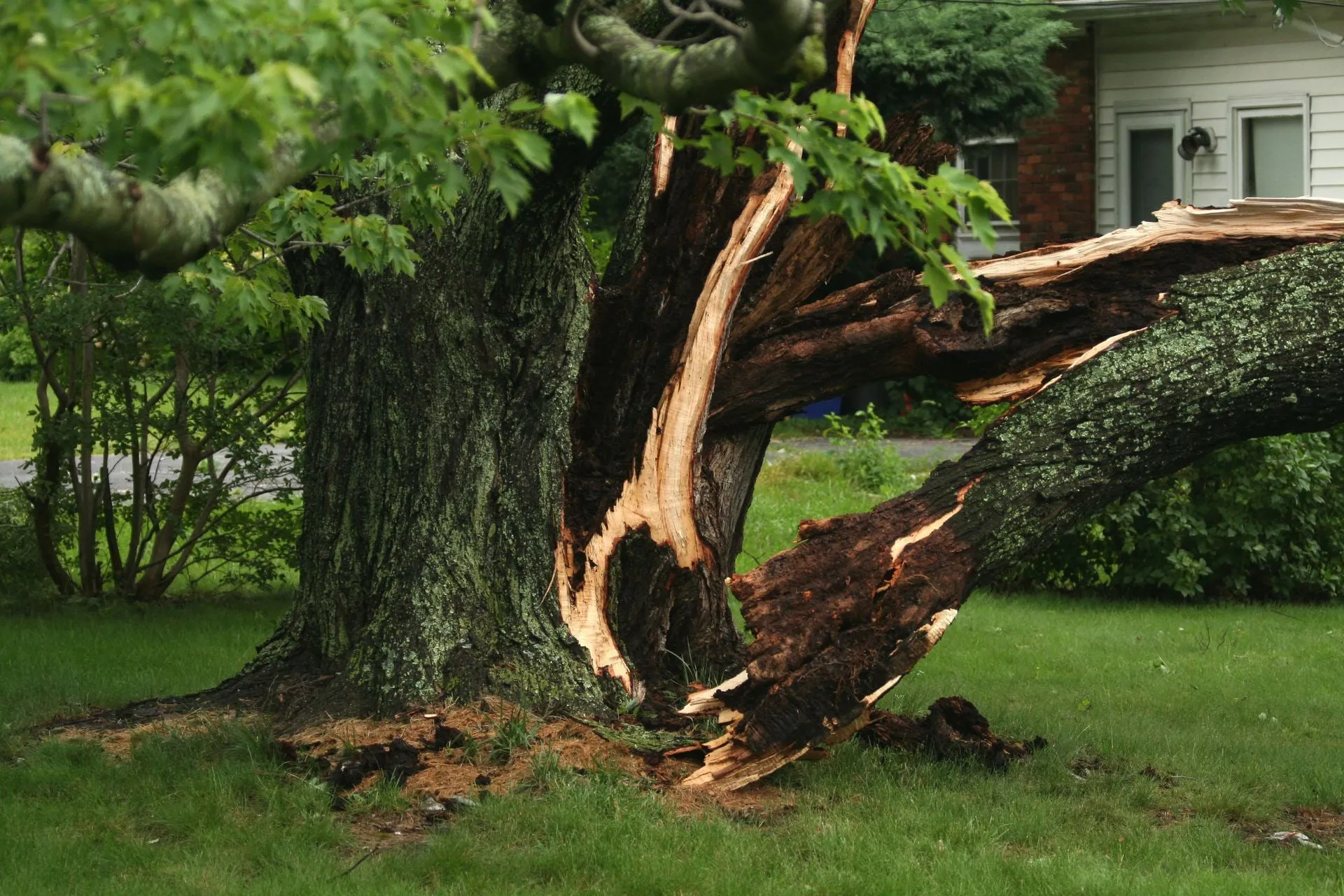
Some problems are fine to watch. Others need a professional soon. If you see dead limbs more than a few inches thick hanging over your home, garage, driveway, deck, or a power line, have them evaluated before winter. The same goes for a tree with significant crown dieback, a new lean, large cracks in the trunk, or fungal growth at the base. Those are the trees most likely to fail under snow load.
Not every stressed tree needs to come down. In many cases, targeted deadwood pruning and weight reduction on overextended limbs is enough to make a tree safe and give it a chance to recover. When a tree is dead, structurally compromised, or heavily infested, removing the tree is the safer choice, particularly if it stands within falling distance of a structure.
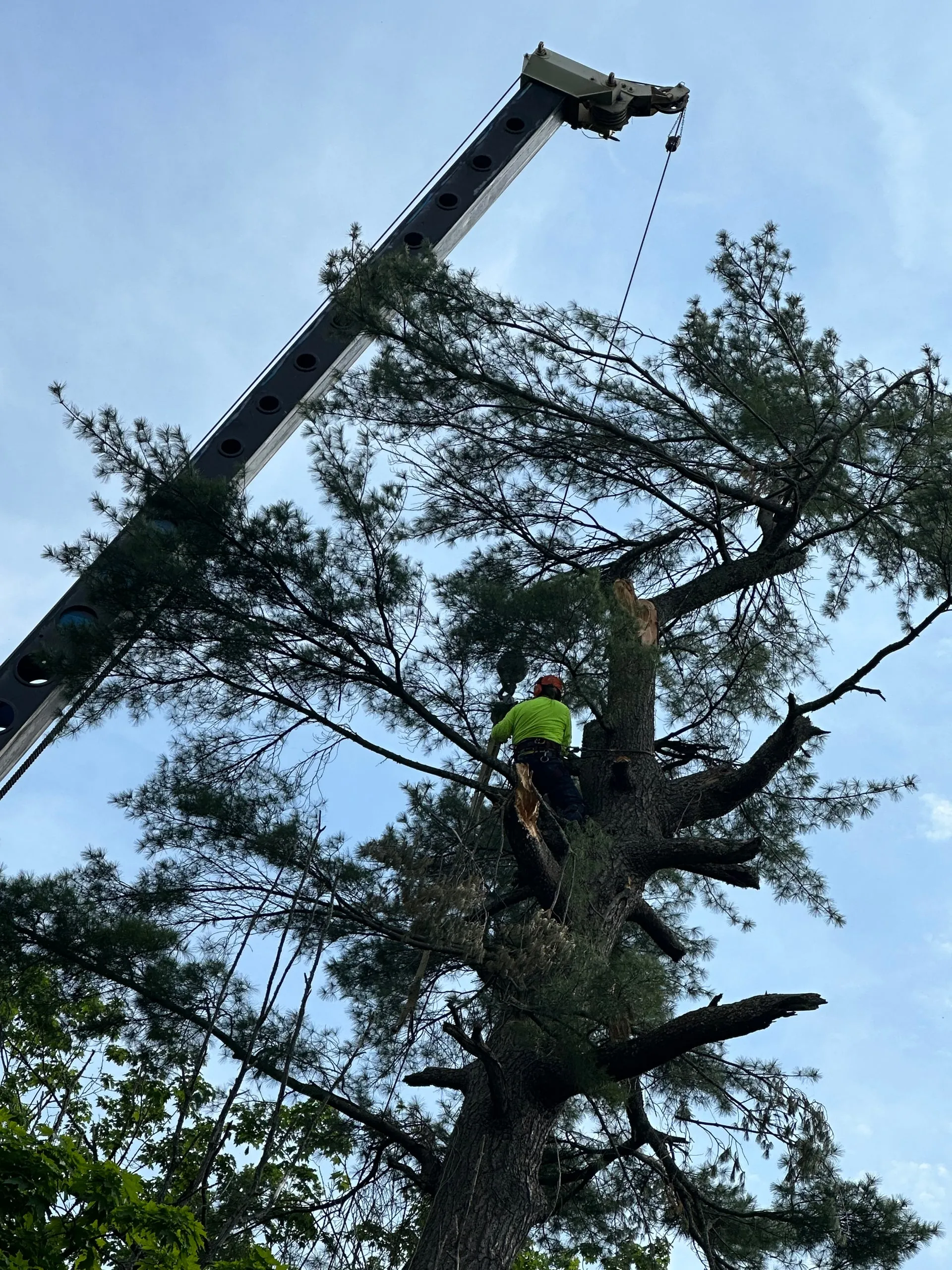
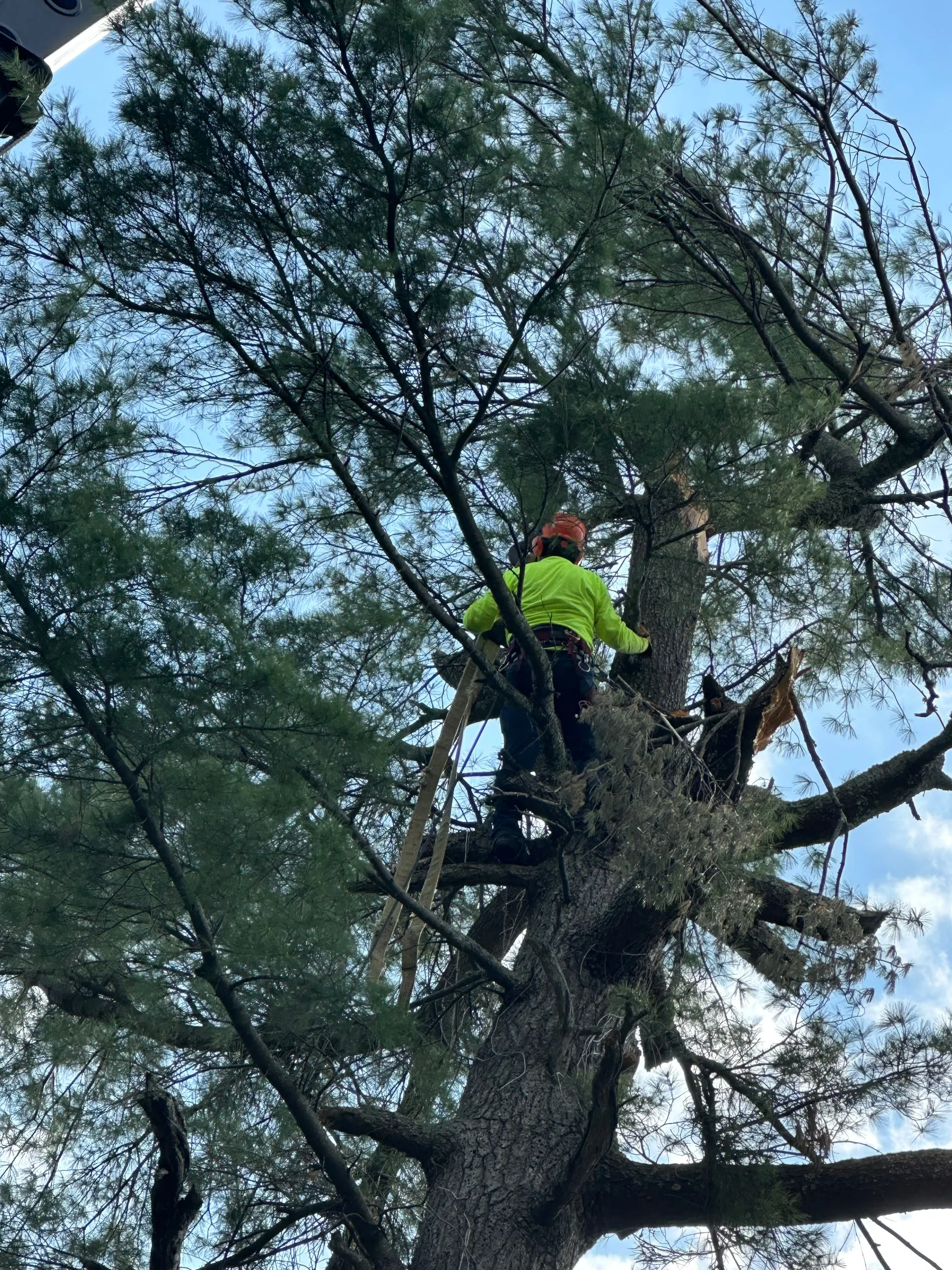
Please do not climb into a drought-weakened tree with a chainsaw yourself. Dry, brittle wood behaves unpredictably when cut, and limbs near power lines should only be handled by trained crews and the utility. Professional crews use rigging, specialized equipment, and, when needed, crane service to lower wood in controlled sections, which protects both the people doing the work and the property below.
Why Late Fall and Winter Are a Smart Time for Tree Work
Many homeowners assume tree work is a summer job, but in northern Wisconsin the dormant season is often the better time. Once the leaves are off, it is much easier to see a tree’s structure, spot dead limbs, and plan clean cuts. Frozen ground also supports heavy equipment with far less damage to lawns, gardens, and septic areas than soft summer soil, which matters on properties where access is tight.
Timing matters for disease, too. Oak wilt is a serious concern in Wisconsin, and the Wisconsin DNR advises against pruning or wounding oaks from April through July, when the beetles that spread the disease are most active. Fall and winter pruning sidesteps that risk.
After a year like this one, scheduling early simply makes sense. Once the first major storm hits, every tree crew in the region gets buried in emergency calls. Having your trees assessed and any hazards handled before snow flies keeps you off that waiting list.
Planning Ahead for Spring Recovery
Drought recovery is a multi-year process. Next spring, compare how each tree leafs out with how it looked this year. Trees that push out full, normal-sized leaves are recovering. Trees that leaf out late, thinly, or with small leaves on only certain branches may need another look.
If a tree does need to come out, think about what goes back in its place. Stump grinding clears the way for replanting or for turning the spot back into lawn, and it gets rid of a stump that can attract insects and send up suckers.
Healthy soil helps everything that grows in it. Bare areas left after a removal or a construction project can be restored with topsoil and seeding so the ground holds moisture better when the next dry summer comes.
Local Tree Care From a Crew That Knows the Northwoods
Quality Tree Service has been caring for trees across Bayfield, Ashland, and Oneida counties since 1988. Owner Mark Hazelquist and our crew bring a combined 85 years of experience, specialized equipment, and a BBB A+ rating we have held since 2013. We handle tree removal, tree trimming, stump grinding, storm damage cleanup, and emergency tree service, along with lot clearing and site preparation for larger properties.
If this year’s drought has you worried about a tree on your property, we are happy to come take a look. From Ashland and Washburn to Hayward, Cable, and Iron River, our team can assess your trees, and recommend the right next step before winter arrives. Reach Quality Tree Service at 715-209-7076, or stop by our office at 307 Washington Avenue in Ashland. Call us today for more details.
Frequently Asked Questions About Drought-Stressed Trees
Will my tree recover from the 2026 drought?
Most established, healthy trees will. Early leaf drop is a defense mechanism, not a death sentence. Recovery depends on the species, the tree’s age and site, and whether secondary problems like borers or decay take hold. Watch closely how it leafs out next spring.
How much should I water my trees before winter?
A common guideline is about 10 gallons per inch of trunk diameter, applied slowly around the drip line so it soaks deep. Keep watering on mild days until the ground freezes, and give newly planted trees and evergreens first priority.
How do I know if a drought-stressed tree is a hazard?
Dead limbs over a home, driveway, or power line, crown dieback, a new lean, trunk cracks, and fungal growth at the base are all red flags. A professional tree assessment is the safest way to decide between trimming and removal.
Ready to Get Started?
Request a free estimate or call Mark’s crew today — we respond fast across northern Wisconsin.